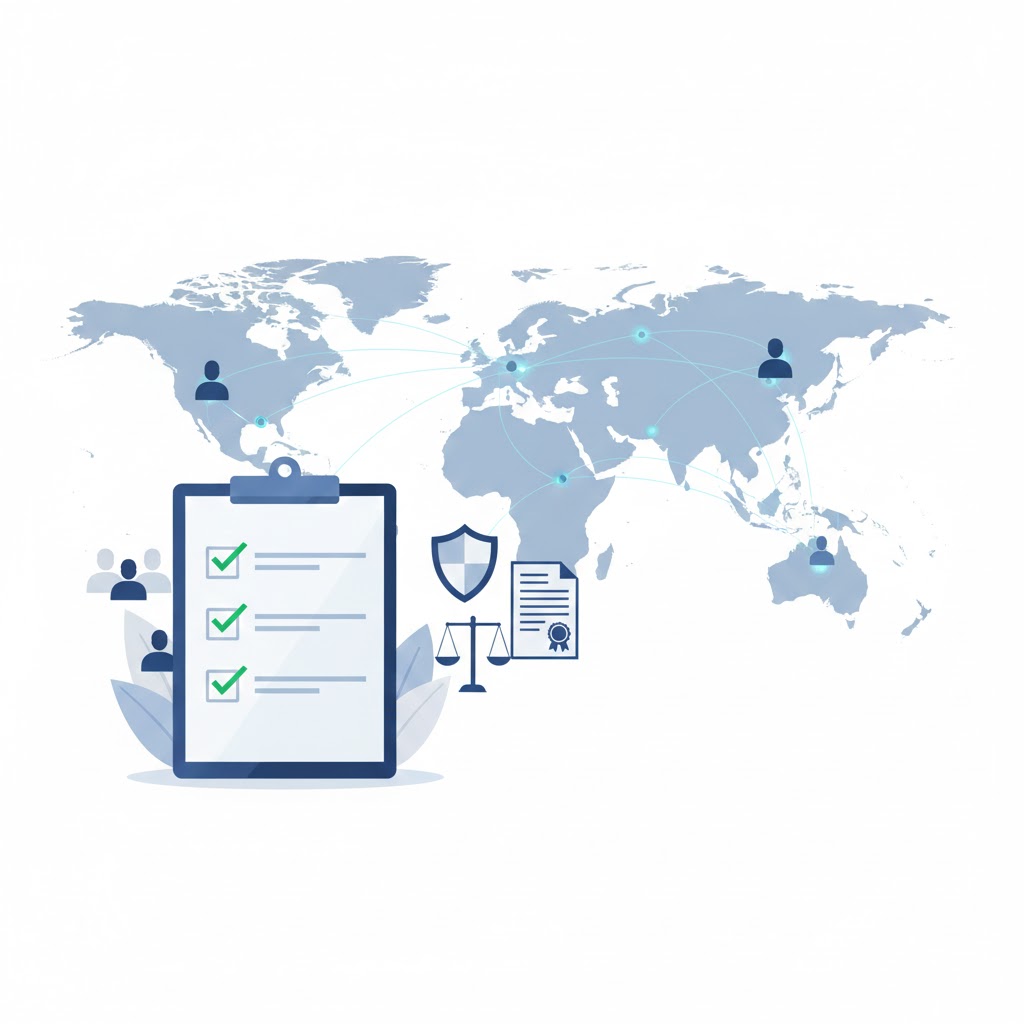
In a globalized world, offshoring talent offers access to specialized skills, faster scalability, and significant cost advantages. But the move isn’t as simple as hiring internationally and getting to work. Behind every successful offshore team lies a complex network of legal, financial, and compliance obligations. Ignoring them can cost a company far more than it saves — through fines, penalties, disrupted operations, or reputational harm.
Before you begin building an international team, it’s essential to understand the compliance landscape. Here is the critical checklist every company must consider.
1. Legal Entity & Employment Status
Employee vs. Contractor
Misclassifying a full-time worker as an independent contractor is a major compliance risk. Many countries use tests like degree of control, integration into the company, and permanence to determine employment status. Misclassification can result in penalties, back pay, unpaid benefits, and legal disputes.
Establishing a Legal Entity
If you plan to hire employees directly, you may need to establish a legal entity in the offshore country. This involves registering the business, obtaining tax IDs, setting up local bank accounts, and meeting corporate governance requirements — often an expensive and time-consuming process.
Employer of Record (EOR) / Professional Employer Organization (PEO)
Many companies choose EOR/PEO partnerships to streamline hiring. The EOR becomes the legal employer in the offshore country, handling payroll, benefits, taxes, and full compliance, while you maintain control of daily management and work direction.
2. Local Labor Laws
Labor regulations differ dramatically from country to country. To stay compliant, companies must understand:
- Working Hours & Overtime: Local rules about maximum weekly hours, rest periods, and overtime compensation.
- Minimum Wage & Fair Compensation: Local wage floors and standard market rates.
- Termination Rules: Requirements for notice periods, severance, and valid grounds for dismissal.
- Leave Policies: Statutory annual leave, holidays, and paid time-off mandates.
- Equal Employment & Safety Standards: Anti-discrimination laws and workplace safety requirements.
3. Tax & Payroll Compliance
Tax compliance is one of the most complex areas of offshoring. Companies must ensure accuracy in:
- Income Tax Withholding: Correct calculation and remittance to local authorities.
- Social Security Contributions: Mandatory employer and employee contributions to retirement, health, or welfare programs.
- Payroll Taxes: Any additional local or national payroll levies.
- VAT/GST Considerations: Tax implications related to services delivered across borders.
- Permanent Establishment Risk: The danger that offshore operations trigger corporate tax liability in that country.
4. Data Privacy & Security
Offshore teams often handle sensitive data, making compliance with privacy laws essential:
- Data Protection Regulations: Requirements under GDPR, CCPA, or local data laws.
- Data Localization: Countries requiring certain data to remain within their borders.
- Cybersecurity Standards: Encryption, secure access, and employee training to prevent breaches.
5. Benefits & Compensation
Benefits must align with both legal requirements and local market expectations:
- Health Insurance: Mandatory health coverage or private plans where required.
- Retirement Schemes: Pension or provident fund contributions mandated by law.
- Statutory Benefits: Maternity/paternity leave, disability coverage, sick leave, and more.
- Competitive Market Benefits: Additional perks needed to attract and retain top offshore talent.
Tecknoz: Your Guide to Seamless Offshoring
Offshoring doesn’t need to be complicated. At Tecknoz, our Offshoring Talent Solutions and Legal Formation services help companies navigate international hiring with confidence. We offer:
- Expert Consulting: Guidance on legal, tax, and compliance requirements across global markets.
- EOR/PEO Partnerships: Access to trusted partners who handle employment and payroll on your behalf.
- Robust Contract Management: Compliant contractor and employment agreements tailored to each jurisdiction.
- Risk Mitigation: Identifying potential legal and financial exposures before they become problems.
Don’t let compliance barriers stand in the way of global growth. Partner with Tecknoz to build your offshore team safely and strategically.