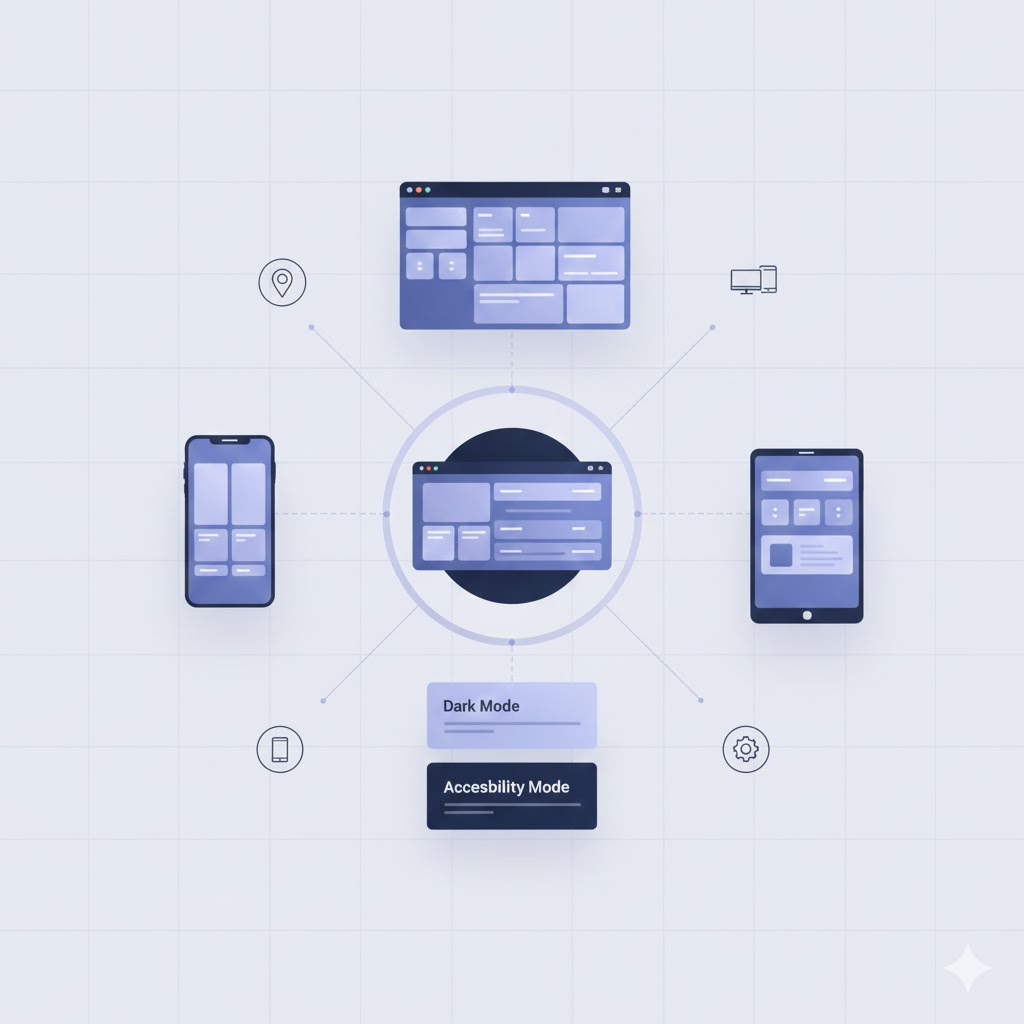
We all know personalization — product recommendations, curated playlists, custom settings. But what if an entire application could transform itself in real time based on your environment, your behavior, or even your emotional state? Imagine an interface that changes layout, features, and priorities depending on whether you're commuting, working late, low on focus, or switching devices.
This is the promise of the Adaptive Interface, an emerging frontier powered by AI and contextual data analysis that is redefining modern digital experiences.
Beyond Personalization: Understanding Context
Traditional personalization relies mostly on preferences and past behavior. Adaptive interfaces go further by understanding and responding to real-world context. This includes:
- Location: A navigation app showing public transit options when you're near a station, but switching to car routes on the highway.
- Time of Day: A productivity app surfacing urgent tasks in the morning and shifting to review tools at night.
- Device & Environment: Larger fonts and simplified UI on a smartwatch, or auto-dark mode in low light.
- User Behavior & Intent: A CRM automatically displaying client notes when you receive their call, or a design tool surfacing the right tools for your current project.
- Emotional State (advanced): Interfaces that adjust cognitive load when signs of stress or fatigue are detected.
The goal is to deliver the right information, tools, and interactions at the perfect moment — making the experience feel intuitive, fluid, and almost predictive.
The Benefits of an Adaptive UI/UX
When context drives design, users experience a more effortless interaction. Key advantages include:
- Increased Efficiency: Users find what they need faster and complete tasks with less friction.
- Higher Satisfaction: Interfaces that “get” the user reduce frustration and create delight.
- Improved Engagement & Retention: People naturally return to systems that feel responsive and intelligent.
- Reduced Cognitive Load: Adaptive simplification helps users stay focused.
- Better Conversion Rates: Guiding users contextually improves decision-making and outcomes.
Challenges in Designing Adaptive Interfaces
Building adaptive UI/UX is powerful, but it comes with serious considerations:
- Data Collection & Privacy: Gathering contextual signals while preserving trust and protecting user data.
- AI/ML Integration: Training models to detect patterns, predict intent, and trigger UI changes.
- Managing Complexity: Ensuring the interface doesn’t become unpredictable or confusing.
- Testing at Scale: Accounting for countless real-world contexts to ensure consistent experiences.
Tecknoz: Crafting Intelligent User Experiences
At Tecknoz, our UI/UX Design team works closely with our SaaS Development and Agentic AI specialists to create adaptive digital products that evolve with the user. Our expertise includes:
- Analyzing contextual user and environmental data.
- Building AI-driven logic that powers dynamic interface behavior.
- Designing user-centric adaptive experiences that remain predictable and meaningful.
- Integrating these capabilities into scalable, high-performance SaaS systems.
Ready to deliver an interface that truly understands your users? Let Tecknoz build your next adaptive experience.